

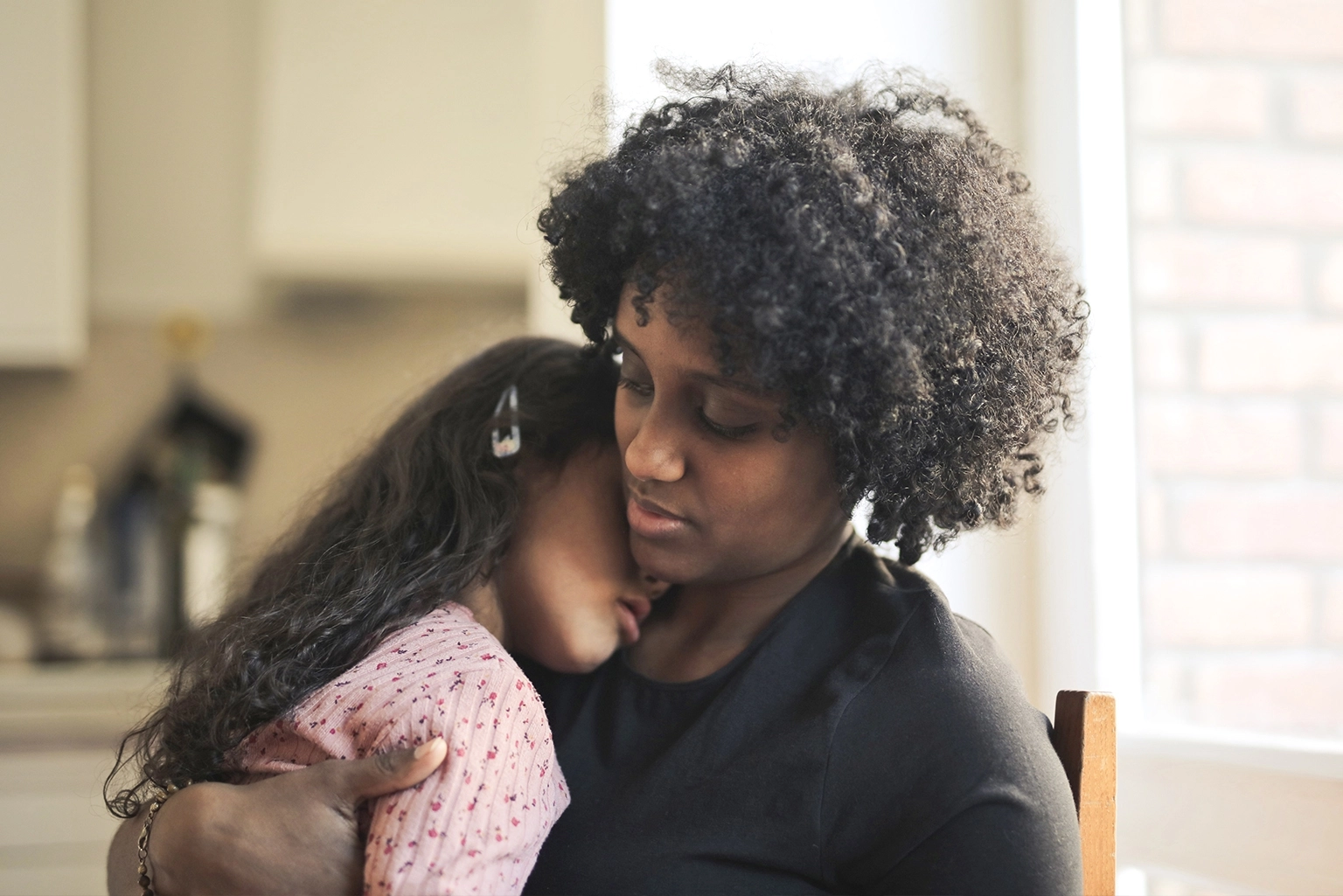
What to Say When Your Child Begs to Come Home
The most difficult experience I’ve had as a parent was being separated from my daughter while she received inpatient mental health treatment. My mind spiraled into everything that could go wrong. I tried to pack her extra socks, but the staff insisted she was only allowed 7 pairs. I forced myself to take deep breaths when I heard screaming in the background of our phone call. I worried about her every day and slept with her stuffed animal, a turtle named Winky, every night.
As hard as that period was for me, I recognize that it was equally difficult for my baby girl. For the first time in her life, she was living in an unfamiliar place without family or friends. She didn’t have her bed, her skateboard, her phone. Above all, she was going through one of the most terrifying moments in her life, surrounded by a group of teenage girls who were battling their own demons.
I remember the first time she asked me to take her home. My entire body cried out, “Yes!” But I felt so scared. If I brought her home now, due to her anxiety as well as my own, before the mental health professionals told me she was ready, what could happen? What would happen? Could I live with the consequences?
Years after my daughter stabilized, I went back to school and started a new career as a therapist. I’ve worked in adolescent residential treatment since 2023, and I now see the struggle of teens and parents who separate due to the need for mental healthcare from a completely different perspective.
Sure, I remember the pain I felt as a mom crying at night while I snuggled Winky and worried if my daughter’s feet were cold. But now I also know the fear of a therapist watching a client drive away because her mom couldn’t endure the separation for one more day, when I knew in my soul that the girl wasn’t ready.
About 99.9% of my clients have begged their parents to take them home at some point during residential treatment, usually at multiple points, sometimes daily. I see the struggle of those kiddos, and I feel in my bones the struggle of those parents. It’s so hard to act in your child’s best interest when that child disagrees with your decision. You worry if you’re doing more harm than good, if they’re really getting better, if they’ll ever forgive you.
As a person who has been on both the parent and the therapist side of this epic struggle, I offer three tools in the hope they’ll be helpful to you, fellow parents. If you are struggling to know what to say when your child begs to come home, reach out to our team for support and read on for some tips.
Tool #1: Refusing to Discuss the Topic
How do you decline to participate in a conversation about your child coming home without her feeling you’re ignoring her needs or don’t care?
The first thing you do is accept that you don’t control her feelings. You may follow every step in this article, read seven books on the subject, tearfully express your infinite love for her on a daily basis, and she may still feel that your refusal to talk about coming home is a betrayal. She may feel abandoned, lonely, unheard, misunderstood, and resentful. And no matter what you do, you will never control how she feels.
Let that sink in.
Good.
The second thing you do is recognize that conversations only happen if both people choose to engage in the topic. Think about it. You probably want to have several conversations in your life right now that other people aren’t willing to give you. No doubt other people also want to have conversations with you, but you’re not giving that to them. No way. These conversations may never happen, and that’s okay. Conversations only happen if both people choose to engage.
When your child starts begging, bribing, or threatening you to take her home, you have the right to decide whether you’re going to engage in that conversation and how to respond. If you choose to engage, God help you. Get comfortable, because you’re going to have this conversation for as long as your child is in treatment.
Setting Boundaries
If that doesn’t sound fun, it’s time to set a boundary. For me, that sounds like (in the sweetest and most compassionate voice you can imagine), “I’m open to talking about anything except for you coming home. We can talk about how mean the girls are, how bad the food is, and how much you miss your dog. I’m all ears. But I won’t be talking about you coming home, so… how is the food?”
Many people believe they should be able to set a boundary, and the hard work is done. But you know better. The hard work is actually to hold that boundary when others step over it multiple times. And believe me, she will step over it.
Compassionately Stand Your Ground
When (not if) she does, here’s another possible response. Notice that you still hear it in the sweetest and most compassionate voice imaginable. “I said that I wouldn’t be talking about you coming home, and I meant that. Do you have another topic you’d like to discuss?”
When (not if) she steps over that boundary again, you might consider the following response. Notice how my voice is, if anything, even more sweet and compassionate. “I’m so happy to see you today, and I’d like for our visit to last as long as possible. Do you think you’re able to respect the boundary I set or do you need a short break from the conversation?”
She’ll probably say she’ll respect the boundary at this point, and maybe she will. But if she doesn’t (how is it possible that my voice keeps getting more genuinely sweet and compassionate?): “I’m going to give you a short break to think about some other topics we can talk about. I’ll be playing solitaire in that corner. Feel free to come grab me if you think of something.”
Wait Until She’s Ready
What if she follows you to the corner and continues to beg, bribe, or threaten? What if she screams? Then (notice how my voice is absolute honey and yet still genuine): “I’m so sad. It seems like maybe you’re not ready for a visitation yet, but I understand. We can try again next week.”
You have the power to decide how long this process goes on, whether you stay if she begs for each new chance, whether you turn around and drive back if the facility calls you to say she’s crying and apologizing and begging you to finish out the visitation.
Personally, I turn back. I try again—for as long as I can. But if I feel my own frustration building, if I am not okay, I call it. And I leave with the sweetest and most compassionate message of all. “I love you so much and can’t wait to see you next week.”
Then, I get a massage. And eat dark chocolate. And binge-watch shows filled with teenage girls telling their moms how much they love them.
You have a decision to make—engage in the conversation (over and over again) or set a boundary and hold it. I will tell you from a therapist’s perspective that the sooner you refuse to engage in the conversation, the sooner she tells herself, “Wow. My mom really isn’t going to pull me. How else can I get out of here…?” She starts asking her therapist how she can get out. And we look at the list of her treatment goals.
The sooner you hold the boundary, the longer she has to do the work.
Tool #2: The Broken Record Statement
It’s called a broken record statement because you repeat it again and again, word for word, with no variation in phrasing or tone. That means it needs to be short and sweet, easy to remember.
My favorite broken record is: “I love you so much. I can’t wait until your therapist tells me you’re ready to come home.”
Then, she begs.
“I love you so much. I can’t wait until your therapist tells me you’re ready to come home.”
She’s heard that before, so she huffs a bit. She bribes you with angel behavior, insists she’s learned everything she can possibly learn, and she’s ready to make real changes.
“I love you so much. I can’t wait until your therapist tells me you’re ready to come home.”
Her eyes widen a bit. You’re not moving on this. Not even a slight variation in tone. Just that same calm message, some stupid crap about her therapist. She gets a little more desperate. Tells you this place isn’t helping at all. That they don’t talk about what she needs. That her outside therapist was much more helpful.
“I love you so much. I can’t wait until your therapist tells me you’re ready to come home.”
She points out that’s all you ever say.
You explain that’s really all you have to say on the topic of her coming home.
Now she’s pissed. She threatens you with something. Says this place is actually making her mental health worse, and you must not love her because if you did, you would take her out.
“I love you so much. I can’t wait until your therapist tells me you’re ready to come home.”
Maybe she throws a fit. Maybe she accepts it. Maybe you’ve set great boundaries with her for your entire relationship, and she hasn’t even pushed this far. But if not, now’s a great time to start.
Imagine if every time she pushed you to take her home, the response was that same sweet, endlessly compassionate message. Imagine if every member of your family who interacts with her has memorized the same message and holds that line along with you. Eventually, she would finish it herself. “I know, I know—you can’t wait until my therapist says I’m ready to come home.”
She might even talk to her therapist. We love that. Because then we can pull out her treatment plan.
Tool #3: The Treatment Plan
Every kiddo in residential treatment has a treatment plan they have created along with their therapist, which includes the goals, objectives (little steps toward the goals), and interventions the therapist will use to support the client in achieving those goals.
You should know the treatment plan. You should have a copy. If your child’s therapist hasn’t already sent it to you, you should request one. If the treatment plan fails to address certain skills your child must develop before leaving residential treatment, you should suggest that the therapist add those as goals.
The treatment plan should include enough goals to keep your child engaged in treatment and working hard for the entire length of her stay. If, at any point in time, your child asks when she will be able to come home, refer to the treatment plan. Focus on the goals and what she still needs to accomplish in order to show that she’s ready to come home.
It might also be helpful to set up some way to visually track her progress toward completing these goals, maybe through some kind of chart or checklist. Celebrate what she accomplishes.
Knowing and using the treatment plan, making it a regular point of discussion with your child, also gives you a wonderful way to engage in her treatment and feel a part of her journey. You might request that she journal about something or write you a letter reflecting on a certain goal.
Bonus points if you show how you’re also challenging yourself in the areas of her treatment plan—finding your own therapist, setting your own goals, or otherwise taking responsibility for your own character growth. Kiddos love to see their parents work hard in the same areas. It can be a great source of support and motivation.
Life Lessons She Will Learn
If you follow the suggestions above, think of all the important life lessons your child will learn through the process. She’ll learn that conversations only happen if both parties are willing to engage. That means she’ll recognize the importance of not only respecting the boundaries others set in conversations but the right she has to set boundaries of her own. Those skills will bless every relationship she engages in for the rest of her life.
She’ll also learn that she can send a loving message to someone and not waiver on that message. She’ll learn that love doesn’t always mean giving someone what they want. She’ll learn to cope with the frustrations of things not going the way she wants and, hopefully, she’ll also learn how to deal with big emotions when they don’t.
Finally, she’ll learn that she’s capable of setting long-term goals, breaking those down into smaller objectives, and applying herself over time to achieve more than she ever thought possible. Imagine a world where she stops selling herself short, where she sees her infinite potential, where she believes she can achieve her dreams.
Learn What to Say When Your Child Begs to Come Home With The Maples
My daughter is now a happily married and productive member of society, holding down two jobs and serving in her community. We enjoy a mother-daughter bond more precious than I could have predicted all those years ago. Her feet stay warm. I’m pretty sure she still sleeps with Winky. And she knows I love her enough to give her the help she needs.
Knowing what to say when your child begs to come home is difficult, but setting boundaries can help you ensure she gets the treatment she needs. Contact The Maples for additional information and to schedule a consultation.